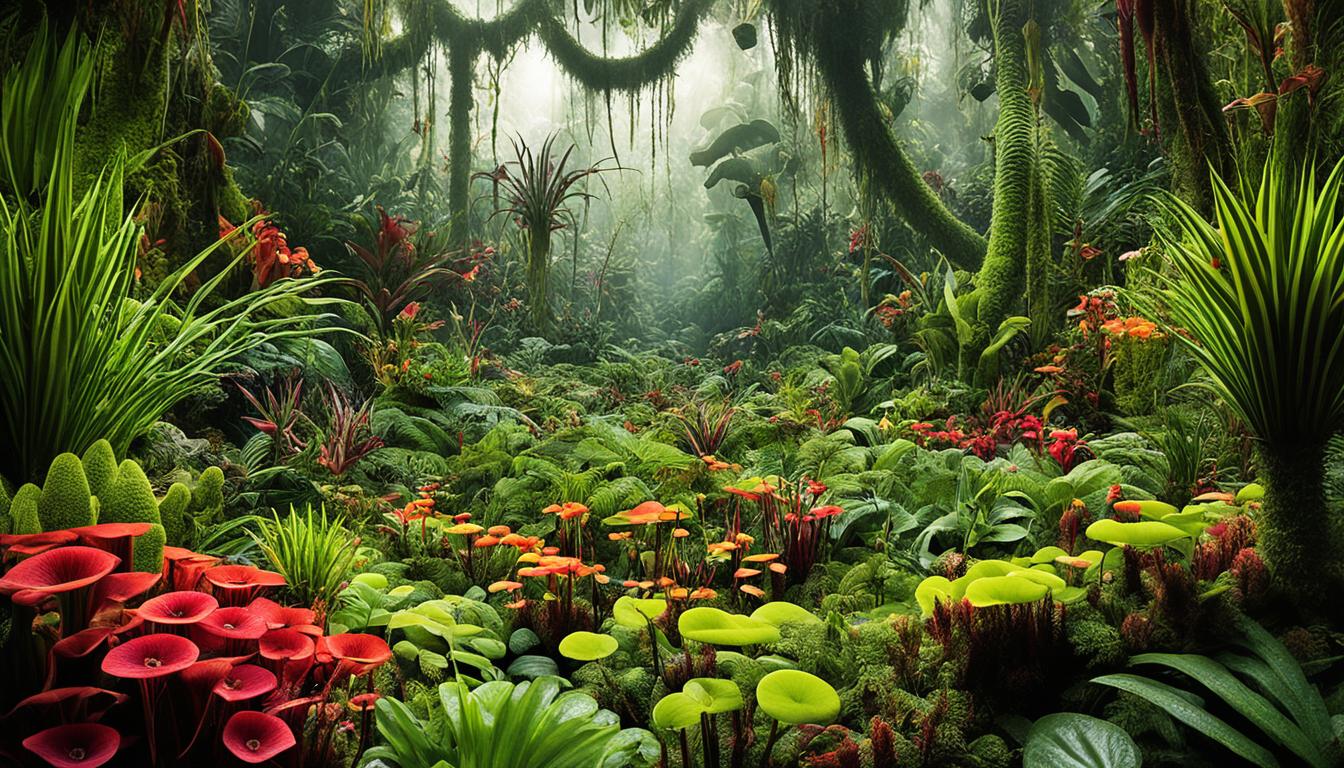
Get ready for an incredible journey into the world of plants. We’ll explore everything from carnivorous plants to the vast variety of plant species. You’ll learn how plants survive in tough environments and their special relationships with fungi.
This journey shows how plants teach us about living sustainably and the healing power of nature. We’ll look at urban gardening, plant-based food, and the beauty in botanical art. It’s a trip into the plant kingdom where science, art, and nature meet.
Join us on this exciting botanical adventure. We’ll dive into the fascinating world of plants, from carnivorous wonders to the many species that enrich our planet.
Unraveling the Mysteries of Carnivorous Plants
Explore the world of carnivorous plants, where plants eat insects to survive. These plants have special ways to catch and digest insects. This helps them live in places where nutrients are hard to find. The Venus flytrap and pitcher plants are just a few examples of these fascinating plants.
From Venus Flytraps to Pitcher Plants
The Venus flytrap is famous for its leaves that snap shut fast to catch insects. It has special hairs that trigger the trap when an insect lands. Pitcher plants, however, have slippery pitchers that insects fall into. There, digestive enzymes break down the insects, giving the plant the nutrients it needs.
Adaptations for Survival in Nutrient-Poor Environments
Carnivorous plants live in poor soil and have special ways to get nutrients. They eat insects to get things like nitrogen and phosphorus that are rare in their soil. This clever way of getting nutrients helps them grow and thrive in places where other plants can’t survive.
Exploring the Diversity of Plant Species
The plant kingdom is full of incredible diversity. From towering trees to delicate wildflowers, each one is unique. Let’s dive into the adaptability and resilience of plants over millions of years.
Picture a lush forest with tall oaks and maples stretching up. Underneath, ferns and mosses grow, each one suited to different light and moisture levels. Deeper down, you might find the pitcher plant, a carnivorous plant that thrives in poor soil.
Outside the forests, plants come in many shapes and sizes. In deserts, cacti stand tall, saving water with their thick leaves and stems. Orchids, with their beautiful flowers, have special ways to attract pollinators. And the dandelion, with its bright flowers and seeds, shows how plants adapt to different places.
Discover the vast world of plants, from the big to the small. Learn to appreciate the amazing ways plants have adapted and survived. They’ve shaped our world in incredible ways.
Educational: Nature’s Classroom for Botanical Wonders
The plant world is full of learning opportunities. It teaches us about biology, ecology, and how living things interact. From carnivorous plants to many other species, nature is a living classroom for everyone.
Learn how plants can help teach and inspire us. By doing hands-on activities, like watching Venus flytraps or pitcher plants, students can see the plant kingdom’s beauty. This helps them understand biology better and care more about nature.

Plants teach us about how living systems work together. By looking at how plants and fungi work together, students learn about life’s complex networks. Studying different plants and their homes teaches them about ecology, evolution, and why saving nature is important.
Education can happen in the classroom, school garden, or on nature trips. The plant world is full of ways to learn. By using this resource, teachers can make students love plants and nature. This helps them understand the important role plants have in keeping our world healthy.
The Fascinating World of Fungi
Explore the world of fungi, where fungi and plants have a special bond. Fungi are more than just decomposers. They are key to the health and balance of ecosystems, adding to the diversity of plants.
Symbiotic Relationships with Plants
Fungi and plants have a complex relationship. They connect underground through mycorrhizae, a network of roots. This connection helps plants get more nutrients and water, and fungi get carbohydrates from the plants.
This partnership is vital for both to survive and grow. Fungi help plants deal with tough conditions like drought or disease. In return, plants give fungi food. This shows how nature is adaptable and resilient.
Learning about fungi and plants helps us understand how life on Earth is balanced. From dense forests to wide grasslands, fungi are crucial in our ecosystems. They shape the world around us in amazing ways.
Plant Ecology and Habitat Conservation
Plants are key to their ecosystems, forming the base of life. They are vital for the balance of nature. Learn about their importance and why we need to protect their homes. See how scientists and environmentalists work hard to save endangered plants and the life they support.
Ecosystems are complex, with plants at their core. They are the main food source for many animals. From forests to grasslands, each plant community is crucial for its habitat’s health.
Many plants are in danger due to habitat loss and damage. Human actions harm natural areas, upsetting the ecosystem balance. Conservationists and scientists are fighting to save these plants. They know saving them is key to a healthy planet.
These experts use research, restoration, and education to protect plants and their ecosystems. By understanding plants’ roles, we see why we must act to save their habitats. This helps keep these plants and the life they support thriving.
The Role of Plants in Sustainable Living
As we aim for more sustainable and livable communities, plants are key. They help us in many ways, from urban gardening to creating green spaces in cities. This makes our lives better and our planet healthier.
Urban Gardening and Green Spaces
Urban gardening is a big step towards sustainable living. It lets city folks grow their own food and enjoy nature. These gardens give us fresh produce, clean air, and make us healthier.
Green spaces like parks and forests make cities better. They give us a break from the city and help nature thrive. This makes our cities more sustainable and enjoyable.
Plants are essential for a green lifestyle. They clean the air, control the temperature, and boost our health. By adding plants to our cities, we make them better places to live.

It’s not just about city gardens. People at home and in businesses are using plants too. They put in green roofs, vertical gardens, and more. This helps save energy, lowers city heat, and connects us with nature.
Medicinal Plants and Herbal Remedies
For centuries, humans have used plants for their healing powers. Let’s explore the long history of medicinal plants and their role in traditional and modern remedies. We’ll look at the fascinating compounds in plants and how they help treat many health issues and improve wellness.
The healing power of plants has been key in medicine, from ancient times to today. Some plants have been known to ease symptoms, fight infections, and help with chronic conditions. Researchers keep finding new ways to use these plants for health benefits.
Medicinal plants are full of phytochemicals like alkaloids, terpenes, and polyphenols. These can be antioxidants, fight germs, reduce swelling, and more. This makes them great for treating different health problems. As we learn more about these compounds, we can make better natural remedies.
Plants like chamomile calm us, while ginseng boosts energy. The world of medicinal plants is full of natural ways to stay healthy. By looking into their history and how we use them today, we see the amazing power of plants for our health.
Botanical Art: Capturing Nature’s Beauty
Explore the world where plants and art meet. This place has inspired many artists over the years. See how botanical art has changed, from scientific drawings to modern art, and how it still moves people.
Botanical art goes way back. Early drawings were like scientific notes, showing the details of plants. They helped scientists and showed the beauty of nature.
Art grew, and so did botanical art. Artists used plants in their work. From Georgia O’Keeffe’s bright paintings to Albrecht Dürer’s detailed drawings, the art shows many styles. These pieces make us see the beauty of plants and nature.
Now, botanical art still amazes people everywhere. You can see it in gardens, galleries, and museums. It shows the lasting power of this special kind of art. Whether it’s a detailed drawing or a modern piece, it always inspires and delights.
Exploring Plant-Based Cuisine
Step into the world of plant-based food, where the variety of tastes and health benefits of plants shine. Chefs and home cooks are getting creative with new techniques and ingredients. They’re making plant-based foods tasty and showing how they can help us eat healthier and sustainably.
Meatless burgers that taste like the real thing are becoming popular. So are plant-based milks. The food scene is changing to meet our need for more plant-based choices. Chefs use vegetables, fruits, grains, and legumes in their dishes. This makes meals colorful and tasty for everyone, not just vegetarians.
Choosing plant-based food is good for our health and the planet. It cuts down on carbon emissions, supports eco-friendly farming, and helps protect nature. By trying out plant-based cooking, we feed our bodies and help make the future greener.