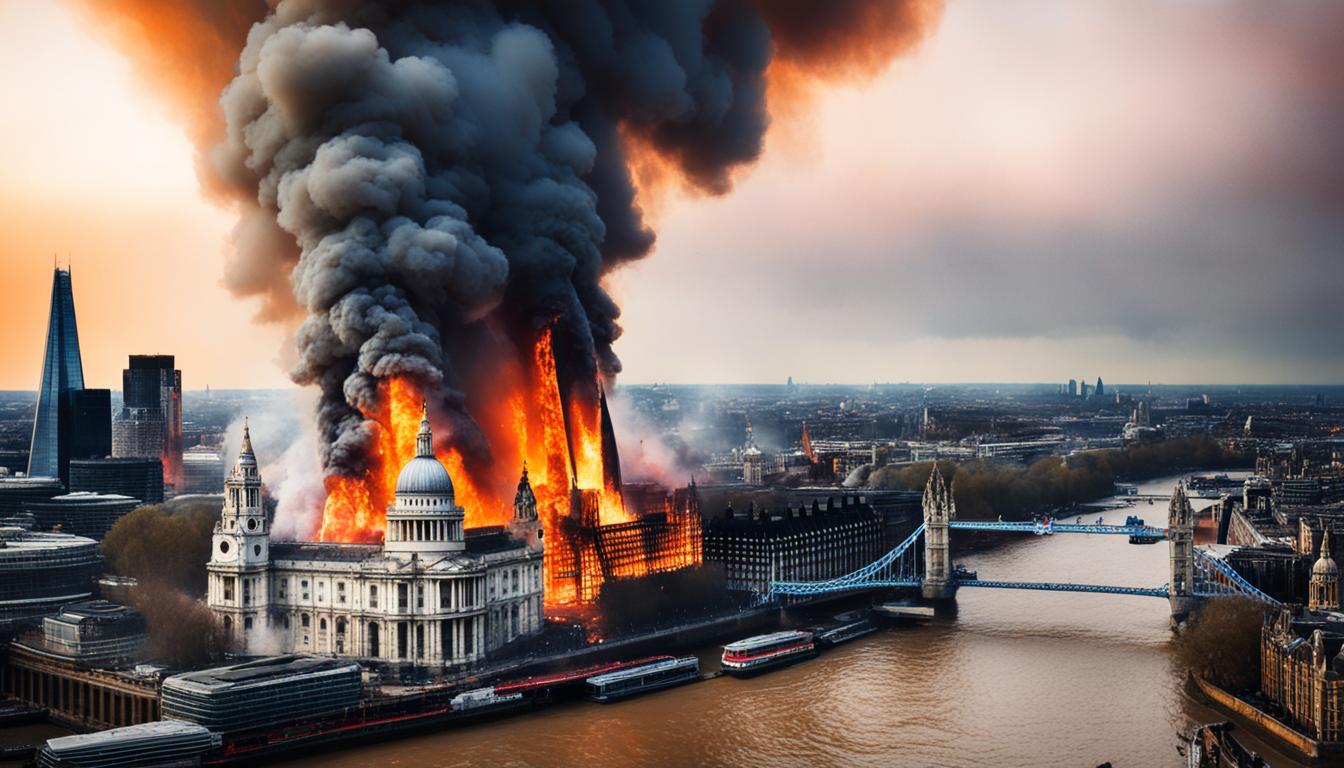
In 1666, London faced a major turning point with a devastating fire. This Great Fire of London destroyed much of the city. It led to big changes in architecture and city planning for many years.
The fire started in a bakery on Pudding Lane and quickly spread. It was fueled by strong winds and dry conditions. The London fire 1666 made the city rethink its old ways. It led to a time of rebuilding and modernizing.
The great fire of london was more than just a fire. It sparked big changes in society, economy, and culture. From the ashes, London was rebuilt with a focus on safety and strength. This made the city ready for the future.
The Origins of the Great Fire
The great fire of London started with a small bakery fire. It happened early on September 2, 1666, in Thomas Farriner’s bakery on Pudding Lane. The fire was small at first, but it quickly spread because of the city’s wooden buildings and the dry weather.
Bakery Blaze that Sparked Catastrophe
The bakery fire grew fast, spreading quickly through the city. The wooden buildings and thatched roofs made it easy for the fire to spread. Back then, there were no good ways to fight fires, so stopping the fire was hard.
Wooden Structures and Dry Weather Conditions
London’s buildings in the 17th century were close together and mostly made of wood. This made the fire spread fast. The dry weather made the fire even worse. Together, these factors led to the Great Fire of London, a huge disaster.
Historical Curiosities
The Great Fire of London is full of interesting facts and lesser-known details. These add depth and intrigue to this key event. They include peculiar incidents and surprising outcomes that grab the attention of historians and the public.
Sailors from the Royal Navy played a big role in fighting the fire. They came from the nearby naval docks to help fight the flames. Their skills and tools were key in stopping the fire from getting worse.
The fire also had big effects on the local economy and businesses. Many merchants and tradespeople lost everything. But some people tried to make a profit from the disaster, by raising rents on buildings that were still standing.
This shows the hard times and the chance for some to gain from others’ loss. It shows the complex social and economic effects of the Great Fire of London.
The fire changed London’s architecture and city planning too. It led to a big rebuilding effort. This brought new building rules and wider streets to stop fires from spreading.
This change reshaped London’s look. It also showed the city’s strength after such a big disaster.
The historical curiosities of the Great Fire of London show its lasting impact. They help us understand the social, economic, and architectural changes it caused. These details keep scholars, artists, and the public interested and inspired.
Rapid Spread and Destruction
The Great Fire of London in 1666 was a disaster that changed the city. It spread fast, thanks to strong winds and old firefighting methods that couldn’t stop it. The city’s firefighting was not organized, and many buildings were made of flammable materials. This made the fire cause huge damage.
Fierce Winds and Limited Firefighting Capabilities
The fire began in a bakery on Pudding Lane but grew out of control quickly. The strong winds spread the fire fast across the city. Back then, London had only bucket brigades and simple fire engines for fighting fires. These methods were not enough against the huge fire.
The city’s firefighting in the 17th century was not ready for a fire like this. Firefighters didn’t have the tools to fight such a big fire. This meant the fire could destroy large parts of the city without being stopped.
Strong winds and poor firefighting tools made the Great Fire a disaster for London. It burned for four days, destroying thousands of buildings and leaving destruction everywhere.
Impact on the City of London
The Great Fire of London in 1666 changed the city forever. It led to big changes that made London more modern and organized. The fire made the city focus on fire safety and a better layout.
The fire destroyed a big part of the city center and left many people without homes. But, it also gave London a chance to start anew. The city’s look and design changed a lot after the fire.
One big change was making buildings safer from fires. The old streets were narrow and had wooden buildings that spread the fire fast. So, new buildings were made wider and used materials like brick and stone that don’t burn easily. This made London safer from fires in the future.
The fire also had big effects on people and the economy. Many lost their homes and businesses. Rebuilding took a lot of work and money. But, the fire led to new ways of building and growing the city. These changes helped shape London’s future for many years.
Rebuilding Efforts and Architectural Changes
After the Great Fire of London, the city started a huge rebuilding project. This effort changed its look. Sir Christopher Wren led the project, building wider streets and using fire-resistant materials like brick. He also created landmarks like the new St. Paul’s Cathedral.
Sir Christopher Wren’s Iconic St. Paul’s Cathedral
Sir Christopher Wren designed the new St. Paul’s Cathedral. It’s a masterpiece of English Baroque architecture. The cathedral’s grand dome and details show the city’s strength and will to rebuild after the fire. Wren’s design made it more fire-resistant.
Wider Streets and Brick Construction
London’s rebuilding included wider streets to improve traffic flow and create firebreaks. Brick became a key building material, replacing wooden structures that spread the fire fast.
These changes, led by Sir Christopher Wren, changed London’s look. They showed a new focus on fire safety and disaster readiness. The rebuilding after the Great Fire was a turning point, making London more resilient and modern.
Social and Economic Consequences
The Great Fire of London in 1666 had a huge impact on the city and its people. Thousands lost their homes, businesses, and important buildings. This made London’s economy suffer a lot.
The fire changed London’s social life too. Many people lost their homes and had to live in tents or with others. This made life hard for many, as they lost their homes and jobs.
The fire hit the economy hard. It destroyed many businesses and places where people worked. This made trade and commerce suffer a lot. Rebuilding took a long time and was hard work.

But the fire also brought new chances for growth. It led to wider streets and buildings made with fire-resistant materials. These changes made London safer and more modern.
The Great Fire changed London in many ways. It changed the city’s look and deeply affected its people. The effects were felt for a long time after the fire.
Legacy and Lessons Learned
The legacy of the great fire of london changed the city forever. It led to big changes in how we prevent and fight fires. This huge event made people realize the need for new safety steps.
Fire Prevention and Safety Measures
After the Great Fire of London, city leaders knew they had to act fast. They brought in new building rules. Now, buildings must be made with fire-resistant materials like brick and stone.
They also made it a rule to have chimneys and fire breaks. These help stop fires from spreading too fast.
Also, firefighting services were set up for the first time. These teams have special gear and training. They help stop fires before they get worse, saving lives and buildings.
The Great Fire taught us a lot about fire safety. It led to better safety rules and teaching the public about fire safety. People learned how to prevent fires and keep safe.
The Great Fire of London still affects how we fight fires today. The steps taken after the fire are key to preventing fires and responding to them. These lessons help us make buildings and communities safer.
Historical Significance and Cultural Impact
The Great Fire of London was a key event in the city’s history. It led to big changes and is still remembered today. Art, memorials, and cultural references keep its memory alive.
Commemoration and Representation in Art
Every year, we remember the Great Fire of London. The Monument to the Great Fire of London is a lasting tribute. Art and literature also keep its memory alive.
Many paintings and illustrations show the fire’s dramatic scenes. Artists like Samuel Pepys and Wenceslaus Hollar captured the fire’s impact. Their work lets us see how the fire changed the city.
The fire’s influence extends to literature, theater, and film. Works by Daniel Defoe and Charles Dickens have shaped our view of this event.
Eyewitness Accounts and Primary Sources
The Great Fire of London in 1666 has been well-documented. Eyewitness accounts and primary sources from the time give us a vivid look at the event. They offer insights into the experiences of those who saw the fire and its effects.
Samuel Pepys, a famous diarist, left us detailed accounts of the fire. His entries are personal and vivid, showing the fire’s unfolding. He described the “strange sight of Paules church, with a great flame” and the “people running about, and in our broad street, now full of nothing but carts and people loading themselves.”

John Evelyn, an architect and diarist, also left us a detailed account. His writings show the destruction’s scale. He noted “the noise and cracking and thundering of the impetuous flames” and the “dismal and deplorable sight, like the picture of the Last Day.”
These accounts and sources give us a unique look at the Great Fire of London. They preserve the personal stories and views of those who lived through it. By reading these narratives, we can better understand the event’s impact and the challenges faced by those who saw it.
The Great Fire’s Place in British History
The Great Fire of London is a key event in the UK’s history. It changed the city’s architecture, urban planning, and fire safety. This fire marked a turning point, shaping the British landscape and culture.
The fire in 1666 destroyed much of the city, including St. Paul’s Cathedral. It forced London to rebuild and rethink its design. This led to big changes in how the city was built.
One big change was better fire safety rules and firefighting. Before the fire, London’s firefighting was not good. The fire led to new building codes, firefighting gear, and better water systems.
Architecture changed a lot after the fire. Sir Christopher Wren designed St. Paul’s Cathedral, a symbol of London’s strength. Streets got wider, and buildings were made of brick to prevent future fires.
The Great Fire also changed the UK’s culture. It inspired art, literature, and memorials. It showed how Londoners overcame a huge challenge, symbolizing the nation’s spirit.
Comparisons to Other Major Fires
The Great Fire of London was a key moment in history. It was not the only fire that caused huge damage and led to big changes. When we look at fires like the Great Chicago Fire or the San Francisco earthquake and fire, we see common challenges and lessons.
The Great Chicago Fire of 1871 was similar to the Great Fire of London. Both fires spread fast because of wooden buildings, dry weather, and limited firefighting. This led to a lot of damage in both cities. After the fires, both cities rebuilt and made new fire safety rules to avoid future disasters.
Another comparison is between the Great Fire of London and the San Francisco earthquake and fire of 1906. Both events greatly affected their cities, causing a lot of destruction and making many people homeless. The San Francisco fire after the earthquake was even worse, showing the importance of being ready for disasters and having good fire safety plans.