In 1453, the Byzantine Empire faced a major challenge. The capital, Constantinople, fell to the Ottoman Empire. This siege lasted weeks and marked the end of Byzantium. It started a new era of Ottoman rule in Europe and the Middle East.
This article will cover the Byzantine Empire‘s history. We’ll look at its rise, culture, and achievements. Then, we’ll see how the Ottoman Empire grew strong, leading to the siege that ended Byzantium.
The fall of Constantinople changed history. It led to the Byzantine Empire‘s decline and the rise of the Ottoman Empire. We’ll look at Byzantium’s legacy, including its architecture, art, and culture. We’ll also talk about the efforts to preserve its history and the ongoing interest in the siege.
The Byzantine Empire: A Brief History
The Byzantine Empire was also known as the Eastern Roman Empire. It was the continuation of the Roman Empire in the Eastern Mediterranean. Its capital, Constantinople, was a city full of wealth, power, and culture. This section will look at how Constantinople started and the Byzantine Empire’s big contributions to art, architecture, and learning.
Origins and Rise of Constantinople
Constantinople started in the 4th century AD when Emperor Constantine the Great picked a spot on the Bosporus Strait for a new capital. The city grew into a key place for trade, politics, and culture in the Byzantine Empire. Over time, it became one of the biggest and wealthiest cities in the medieval world.
Cultural and Artistic Achievements
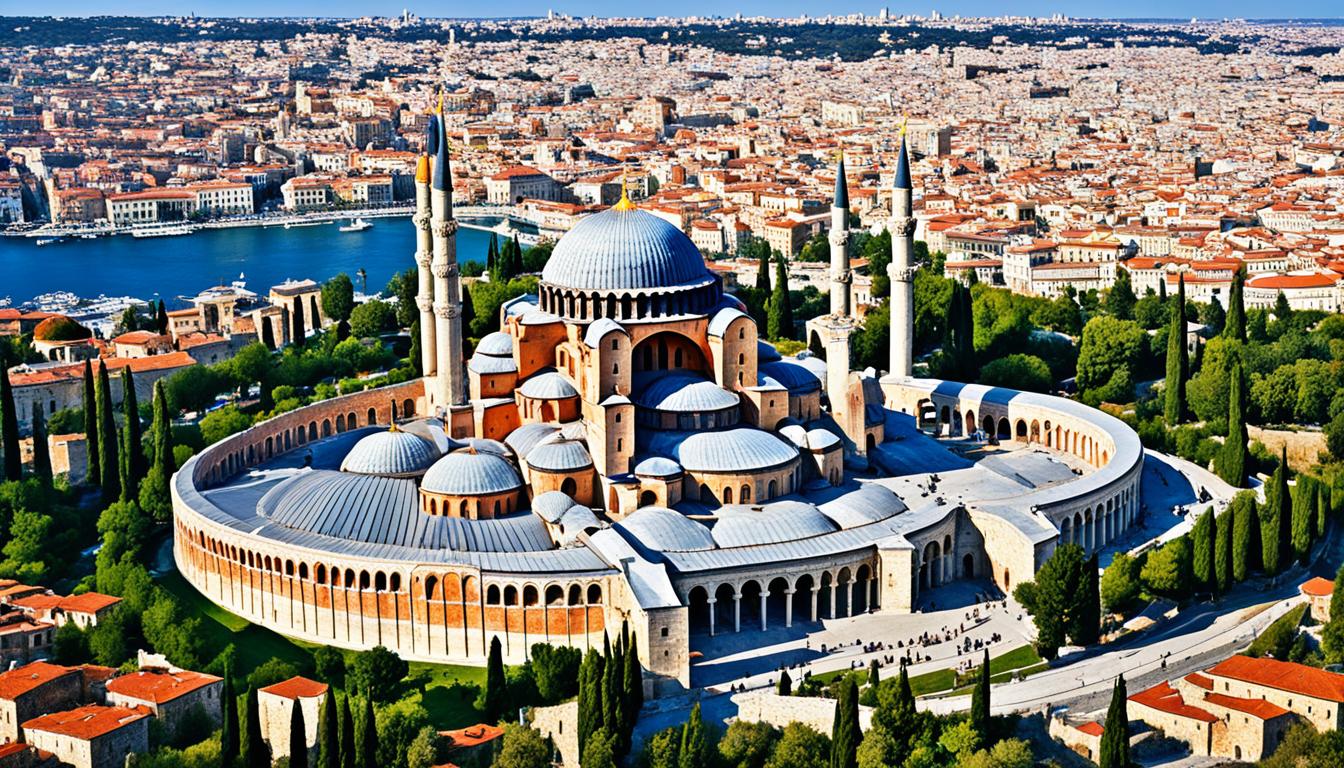
The Byzantine Empire was a big center for art, architecture, and learning. The famous Hagia Sophia shows the empire’s skill in building and culture. Byzantine artists were great at making mosaics, frescoes, and metalwork, showing off the empire’s culture.
They also made big steps in fields like philosophy, math, and theology. The Byzantine Empire’s legacy still interests historians and fans today. Its old buildings and stories show how it shaped the Eastern Mediterranean and beyond.
The Ottoman Empire: Ascending Power
In the 15th century, the Ottoman Empire grew stronger as the Byzantine Empire weakened. Led by Sultan Mehmed the Conqueror, the Ottomans aimed to spread their influence. They used their strong military to get what they wanted.
Expansion and Military Might
Mehmed the Conqueror led the Ottoman Empire into a series of military campaigns. These campaigns helped the empire grow. The Ottomans had a well-trained army with skilled archers, elite infantry, and strong artillery.
Under Mehmed’s leadership, the Ottomans won many battles in the Balkans. They slowly took over the Byzantine Empire’s lands. This gave them control over important places.
The Ottomans’ constant growth and strong military made them a leading power. The siege of Constantinople marked the end of the Byzantine Empire. It helped the Ottoman Empire become the top power in the region.
The Siege of 1453: A Turning Point
The Siege of Constantinople in 1453 was a key moment in history. It was a battle between the Byzantine Empire and the Ottoman Empire. This battle would decide the future of Constantinople, the Byzantine capital.
The Ottoman forces, led by Sultan Mehmed II, attacked the city. The Byzantine defenders fought hard to save their city. The Ottomans used big cannons to try and break through the city walls.

After many weeks of fighting, the Ottomans made a final push on May 29, 1453. They broke through the city walls, and Emperor Constantine XI was killed. This event ended the Byzantine Empire and made the Ottoman Empire more powerful.
This siege changed history. It meant the end of the Byzantine Empire and the rise of the Ottoman Empire. This change had big effects on the region for many years.
Historical Curiosities: Untold Stories
The Siege of Constantinople has always fascinated historians and the public. It has created a world of legends and myths that have lasted for centuries. These stories, hidden beneath the main accounts, reveal the mysterious side of the Siege of Constantinople.
Legends and Myths Surrounding the Siege
A famous legend is the “Prophecy of the Last Emperor.” It says a prophecy predicted the last Byzantine Emperor would see the city fall. When the Ottomans broke through the walls, Constantine XI Palaiologos fought bravely until the end. Some think he turned into a statue or went to heaven, while others believe he’s still out there, waiting to come back.
Another myth is about the “Immortal Janissaries.” These were the elite soldiers of the Ottoman Empire, known for their loyalty and discipline. Legends say they could come back to life after dying. This story has made many wonder about the Ottomans’ victory.
There’s also the “Leaden Coffin” story. It says the last emperor’s body was put in a lead coffin and hidden in Hagia Sophia, a famous Byzantine church. No one knows where the coffin is, leading to many guesses and searches.
These legends and myths make the Siege of Constantinople even more fascinating. They show how deeply this event has touched our imagination. They prove the Siege’s lasting impact on history and keep us interested in its secrets.
The Fall of Constantinople: Consequences
The fall of Constantinople in 1453 had huge effects that changed history. The defeat of the Byzantine Empire ended a civilization that had ruled the Mediterranean for centuries. This event led to the decline of the Byzantine Empire and the rise of the Ottoman Empire.
Decline of the Byzantine Empire
The loss of Constantinople was a huge hit for the Byzantine Empire. This city was the empire’s capital and heart. Its capture by the Ottomans ended the Byzantine reign. Without their capital and losing land, the Byzantine Empire quickly fell.
Its power in politics, economy, and culture decreased. It eventually gave in to the Ottoman Empire’s growth.
The Fall of Constantinople changed the region’s power balance. The Ottoman Empire, led by Sultan Mehmed II, became the top power in the Eastern Mediterranean. This change led to the Ottoman Empire’s rise and less European influence in the area.
The effects of the Fall of Constantinople went beyond the region. It marked the end of the Middle Ages and the start of the Renaissance in Europe. Byzantine scholars and intellectuals moving to the West sparked a new interest in classical learning and arts. This shaped Europe’s culture and intellect for many years.
The Legacy of Byzantium: Enduring Influence
The fall of Constantinople in 1453 ended the Byzantine Empire. Yet, its legacy still shapes our culture, art, and architecture. The Byzantine Empire’s impact on the world is clear and lasting.
Byzantine art and architecture left a lasting mark. You can see Byzantine domes, mosaics, and frescoes in many places. The Hagia Sophia in Istanbul is a prime example of Byzantine architecture, still amazing people today.
The Byzantine Empire also left a mark on culture. Its scholars kept ancient Greek knowledge alive. They saved works by Plato and Aristotle. The Empire’s traditions, like its liturgy and icons, have shaped Orthodox Christianity.
Even after Constantinople fell, Byzantium’s legacy remains strong. Its art, architecture, and culture still influence us today. They remind us of Byzantium’s lasting impact.

Exploring the Remnants: Archaeological Discoveries
The Siege of Constantinople in 1453 was a turning point in history, ending the Byzantine Empire. Today, the ruins of this civilization still fascinate historians and archaeologists. Through excavations and discoveries, we’re slowly uncovering the secrets of the past. This reveals the Siege of Constantinople and the Byzantine Empire’s rich culture.
Uncovering the Past: Excavations and Artifacts
In modern-day Istanbul, archaeologists are carefully finding the Byzantine era’s remains. They’ve found many artifacts, like sculptures, mosaics, and household items. These items show us what life was like during the Siege.
Important finds include the city’s defenses against the Ottomans. Parts of the Theodosian Walls, built in the 5th century, have been found. These show the engineering that once kept Constantinople safe.
Excavations have also found personal items like jewelry, coins, and everyday tools. These objects tell us about the Byzantine Empire’s culture and connect us to people who lived through the Siege.
As archaeologists keep exploring, they’re sure to find more important discoveries. Each new find helps us understand the Siege of Constantinople better. It also shows its big impact on world history.
The Hagia Sophia: Architectural Marvel
The Hagia Sophia is a stunning example of Byzantine architecture. It has been a symbol of the Byzantine Empire’s culture and art for centuries. Located in Istanbul, it has seen many changes, from a Christian cathedral to an Ottoman mosque, and now a museum.
It was built in the 6th century AD during the reign of Emperor Justinian I. The Hagia Sophia is a masterpiece of engineering and design. Its huge dome, over 100 feet wide, was a groundbreaking achievement. The mix of Byzantine and classical styles, like grand arches and intricate mosaics, makes it visually stunning.
Over the years, the Hagia Sophia faced many challenges, including invasions and changes in religion. When the Ottoman Empire took over in 1453, it became a mosque. Many Christian symbols were covered or removed. Yet, its architectural beauty remained, showing the lasting impact of Byzantine culture.
Now, the Hagia Sophia is a UNESCO World Heritage Site, attracting millions yearly. It’s a symbol of the blend between the Byzantine and Ottoman Empires. It continues to inspire and remind us of the power of architecture and human creativity.
Remembering the Siege: Commemorations and Memorials
The Siege of Constantinople in 1453 was a key event in history. It marked the end of the Byzantine Empire and the start of the Ottoman Empire. Over time, this event has been honored and remembered in many ways. It shows how important the Siege of Constantinople is to us today.
In Istanbul, the former Constantinople, a big festival happens every year on May 29th. It celebrates the city’s fall. The festival includes parades, reenactments, and cultural shows that pay tribute to the Siege’s history.
Monuments and memorials also remember the Siege of Constantinople. In Istanbul, the Fatih Mosque was built where the Byzantine cathedral of Hagia Sophia once stood. It shows the Ottoman victory. The Mahmut Pasha Bastion, a key fort in the siege, is also preserved. It reminds us of the city’s past.
The Siege of Constantinople has influenced art and literature too. Many stories, poems, and artworks talk about the siege and its effects. These works keep the memory of the siege alive. They make sure the legacy of Byzantium and Constantinople’s fall stays with us.
Looking back, the Siege of Constantinople is still very interesting and studied by scholars. Its commemoration and the saving of its landmarks keep its memory alive. They remind us of the big changes in history.
The Siege in Art and Literature
The Siege of Constantinople has captured the hearts of many artists and writers. It’s a story of drama and bravery that has lived on through art and literature. From grand paintings to epic poems, it’s a tale that continues to inspire.
Artists like Gentile Bellini have brought the siege to life with their paintings. They show the Ottoman army’s attack in vivid detail. Sculptures also tell the story, like the statue of Constantine XI, the last Byzantine emperor, standing strong as his empire falls.
Literature has also been shaped by the Siege of Constantinople. Works like “The Fall of Constantinople” by Konstantinos Palaiologos and “The Conquest of Constantinople” by Tursun Beg are famous. They tell the story of the final days of the Byzantine capital and the Ottoman victory.