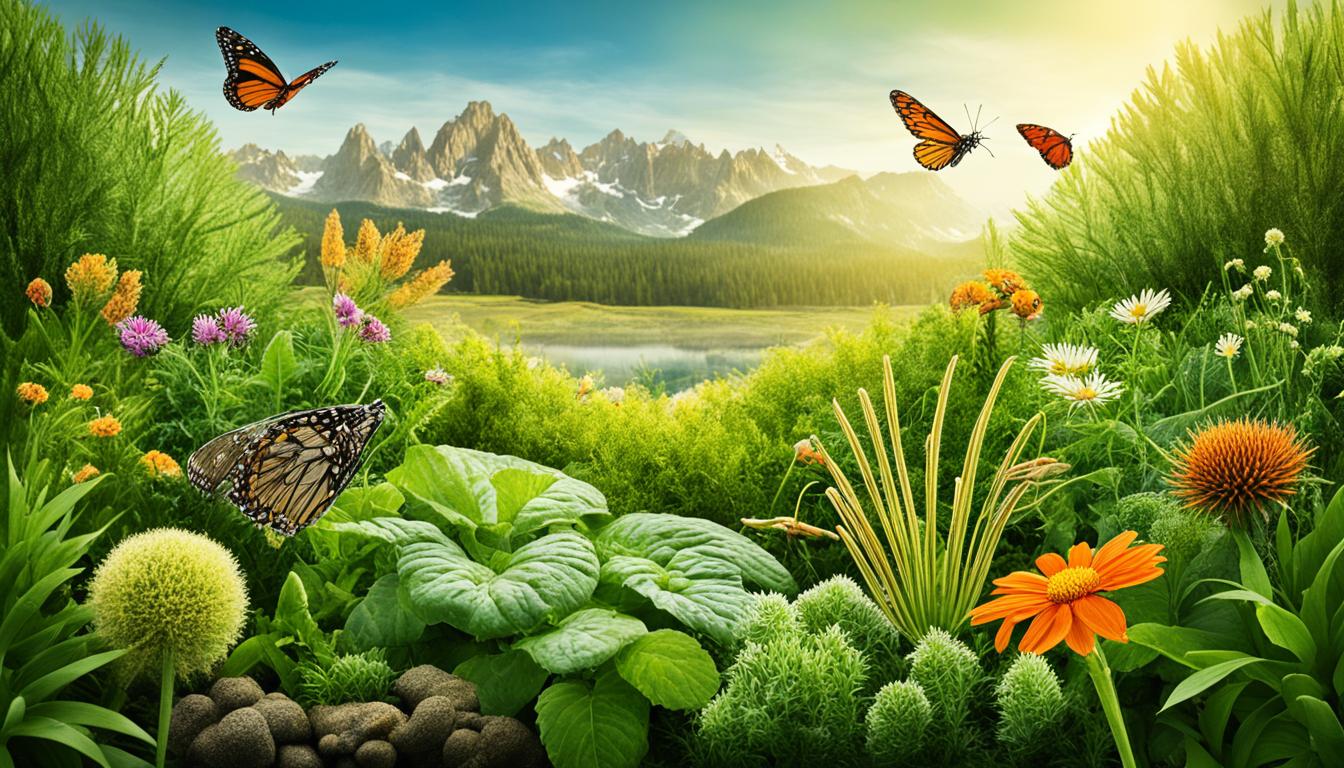
The natural world is full of life, where plants and animals live together in balance. We’ll dive into ecosystems to see how they work. This article will show how plants and animals interact, highlighting what makes these biological systems work.
At the core of every ecosystem is photosynthesis. It’s the key to energy and nutrient flow. We’ll look at how producers, consumers, and decomposers keep nature in balance. This will help readers understand the complex interactions in our world.
Learning about plants and animals helps us see why biodiversity is crucial for our ecosystems. This article will cover symbiotic relationships, ecosystem services, and threats like habitat loss and climate change. By exploring these topics, readers will learn how to protect our environment for the future.
Introduction: Exploring the Intricate Web of Life
The natural world is full of interconnected systems. Every living thing has a vital role. At the center is the ecosystem. It’s a community of living beings and their environment, working together in a self-sustaining system.
The Importance of Ecosystems
Ecosystems are key to our planet’s biodiversity and the life processes that support all living things. They manage energy flow and nutrient cycling. This balance lets plants, animals, and microorganisms live well. Knowing about ecosystems is important because they give us resources, control the climate, and keep our environment healthy.
Key Components: Producers, Consumers, and Decomposers
Every ecosystem has three main parts: producers, consumers, and decomposers. Producers, like plants, make food from sunlight. Consumers, such as animals, eat these producers. Decomposers, like fungi and bacteria, break down organic matter and return nutrients to the system. This cycle of producers, consumers, and decomposers keeps the ecosystem going.
Learning about ecosystem components helps us see how complex and strong these systems are. By understanding ecosystems, we can work to protect our planet’s diverse habitats.
Photosynthesis: The Foundation of Ecosystems
Photosynthesis is key to life in most ecosystems. It’s how energy and nutrients move through the ecosystem. Plants use sunlight to turn carbon dioxide and water into food and oxygen.
Photosynthesis is a complex process involving plants, sunlight, and elements. Plants, as producers, have chloroplasts that capture sunlight energy. This energy helps split water into hydrogen and oxygen. The hydrogen and carbon dioxide form glucose, which fuels plant growth. Oxygen is released, vital for all aerobic life.
Photosynthesis is crucial to ecosystems. It supports all life by providing energy and nutrients. Without it, the ecosystem would collapse, affecting countless species.
Food Chains and Food Webs
In the world of nature, energy and nutrients move through a complex system. This system connects producers, consumers, and decomposers. It’s important to know about these to understand how nature stays balanced.
Energy Transfer and Nutrient Cycling
The food chain shows how energy moves from one living thing to another. It starts with plants and goes up to top predators. As energy moves up, most of it turns into heat, leaving little for the next level. This flow of energy is key for life and growth in nature.
The food web shows how different species are connected through eating. It shows how producers, consumers, and decomposers work together. Decomposers like bacteria and fungi break down dead matter, putting nutrients back into the soil. This way, nutrients can be used again by plants and start the cycle over.
Thanks to the recycling of nutrients, ecosystems stay healthy and strong. This process is driven by the work of producers, consumers, and decomposers. Knowing about these processes helps us keep nature’s balance intact.
Symbiotic Relationships: Mutualism, Commensalism, and Parasitism
Ecosystems are complex networks of life, filled with fascinating interactions. Symbiosis is a key part of these relationships. It means when two or more organisms rely on each other for mutual gain. There are three main types: mutualism, commensalism, and parasitism.
Mutualistic relationships benefit both species involved. For example, flowers and bees or butterflies work together. Flowers give nectar to the bees, and bees help spread pollen, which helps flowers reproduce.
Commensalism is when one species benefits, and the other is not affected. Remora fish and sharks have this kind of relationship. Remoras ride on sharks and eat the leftovers, without harming the shark.
Parasitism is when one organism, the parasite, harms the other, the host. Parasites can be tiny, like viruses, or big, like ticks. They harm the host’s health, causing problems from mild to severe.
These plant-animal interactions show how ecosystems work together. They highlight the balance in symbiotic relationships. Knowing about mutualism, commensalism, and parasitism helps us see how connected the natural world is.
Ecosystem Services: Nature’s Invaluable Contributions
The natural world gives us many important services that are key for our health and the planet’s well-being. These services are split into two main types: regulating services and provisioning services.
Regulating Services
Regulating services help control environmental processes. For example, forests and wetlands absorb carbon dioxide, fighting climate change. They also clean our water and protect aquatic life. Plus, they stop soil erosion and keep the land fertile, helping plants and crops grow.
Provisioning Services
Provisioning services give us direct products like food, water, and materials. Things like fertile soil, forests, and water bodies provide food, timber, and other resources. They also give us medicinal plants and other natural goods that improve our health and life quality.
Understanding the value of these services is key to keeping our environment healthy for the future. By taking care of our natural resources, we can keep enjoying the many benefits they offer for years to come.
Educational: Exploring Ecosystems Through Hands-On Activities
Discover the magic of nature with ecosystem education! From fun classroom lessons to exciting outdoor exploration, there’s a lot to learn about our ecosystems. These hands-on activities and interactive learning experiences are perfect for sparking curiosity and understanding nature.

In class, students can learn about food webs and ecosystems through simulations. They can also go on virtual field trips to see different ecosystems up close. Outside, they can do things like test soil, check water quality, or watch wildlife.
These hands-on activities make learning fun and real. They let people really explore and interact with nature. This way, people develop a strong connection with the world around them.
With ecosystem education, teachers and groups are making learning more hands-on. Whether you’re a student, teacher, or nature lover, now is a great time to learn about our ecosystems.
Biodiversity: The Spice of Life
Our planet is home to a wide variety of life forms, from huge redwoods to tiny microorganisms. These species together create the unique character and strength of our ecosystems. Biodiversity is key to ecosystem health and helps keep nature in balance.
Measuring Biodiversity
Figuring out how much biodiversity an ecosystem has is hard but crucial. Scientists count how many different species there are and how common they are. This helps us understand how stable and resilient the ecosystem is.
Threats to Biodiversity
Unfortunately, biodiversity is facing many threats from human actions. Things like deforestation, building cities, and farming are main causes of losing species diversity. Invasive species and climate change also harm ecosystems.
Keeping our planet’s diverse life forms is vital for our own health and well-being. By knowing how important biodiversity is and the dangers it faces, we can work to protect and restore these essential natural resources for the future.
Ecological Succession: The Ever-Changing Face of Ecosystems
Ecosystems change over time through ecological succession. This process shows how plants and animals change and adapt to their environment. It leads to more stable and complex ecosystems.
At the core of ecological succession is how species interact and adapt. New species come to an area and change its environment. This makes it better for other species to live there. This cycle keeps going, making ecosystems more diverse and self-sustaining.
The process of ecological succession has primary and secondary stages. Primary succession happens in places with no life, like new islands or areas where glaciers have moved back. Species like lichens and mosses start to grow, making soil and allowing bigger plants to grow. This leads to a more complex ecosystem over time.
Secondary succession occurs where an ecosystem has been damaged, like after a fire or when forests are cut down. The remaining plants and seeds help start the recovery process. This makes the ecosystem change faster than primary succession.
Understanding ecological succession helps us see how ecosystems are always changing. It shows how plants and animals shape their environment. This helps us value the natural world and the need for a healthy ecosystem.
Human Impact on Ecosystems
Humans greatly affect the balance of ecosystems worldwide. Our actions, like habitat loss and pollution, can disrupt nature’s delicate balance. It’s important to see how our actions impact the environment and work to lessen our effects.
Habitat Loss and Fragmentation
Humans mainly harm ecosystems by destroying and fragmenting habitats. Our cities, farms, and buildings take over nature’s spaces. This pushes many plants and animals to fight over less space or move away, hurting biodiversity and ecosystem balance.
When habitats are split into smaller pieces, it’s called fragmentation. This makes it hard for species to move and find mates, making them more likely to disappear. It also weakens the ecosystem’s ability to recover.
Pollution and Climate Change
Pollution and climate change are other big threats from humans. Pollutants like chemicals and plastics harm air, water, and soil. Climate change, caused by us, changes weather patterns, affecting ecosystems and pushing species away.
Together, habitat damage, pollution, and climate change are harming our planet. We need to work together to use the earth more wisely and protect our ecosystems.

Conservation Efforts: Protecting Our Ecosystems
With threats to our natural environments growing, we’re focusing more on protecting them. People, groups, and governments are working together to keep our ecosystems healthy. They aim to keep them resilient and protect the biodiversity they hold.
Initiatives are leading the way in promoting sustainable practices and protecting the environment. These efforts include eco-friendly land-use policies and supporting projects to restore ecosystems. They help lessen the harm human actions can cause to fragile habitats. By showing how everything is connected, these efforts encourage us to think more about our impact on nature.
Restoring damaged habitats is a big part of protecting ecosystems. Researchers and conservationists are working to bring back the health of ecosystems. This lets native species flourish again. It also keeps biodiversity high and helps with things like clean water, clean air, and storing carbon.
There are many ways people can help protect ecosystems. Simple actions like reducing waste, saving water, and choosing sustainable food can make a big difference. By making choices to protect the environment, we all can be part of the solution. This helps keep our planet’s ecosystems safe for the future.
Together, government efforts, community projects, and individual actions can save our ecosystems. By living sustainably, fixing damaged habitats, and valuing nature, we can keep these vital resources safe. This ensures a better and more resilient future for all.
Future Challenges: Sustaining Ecosystems for Generations to Come
Looking ahead, our ecosystems face big challenges. Climate change, caused by us, threatens the natural world. It changes temperatures and rainfall, upsetting the balance of nature.
The need for resources like food, energy, and materials is growing fast. This puts a lot of pressure on the environment. It leads to destroying habitats and using up important resources.
We need new solutions to tackle these problems. These solutions must be based on smart resource use and understanding nature. Switching to renewable energy, farming in a sustainable way, and protecting different species are key steps.
People in charge, scientists, and citizens must work together. They need to create plans that deal with all the issues at hand.
We must act now to protect our ecosystems for the future. By living sustainably, we can keep the balance that supports life. This way, we leave a good legacy for those who come after us.