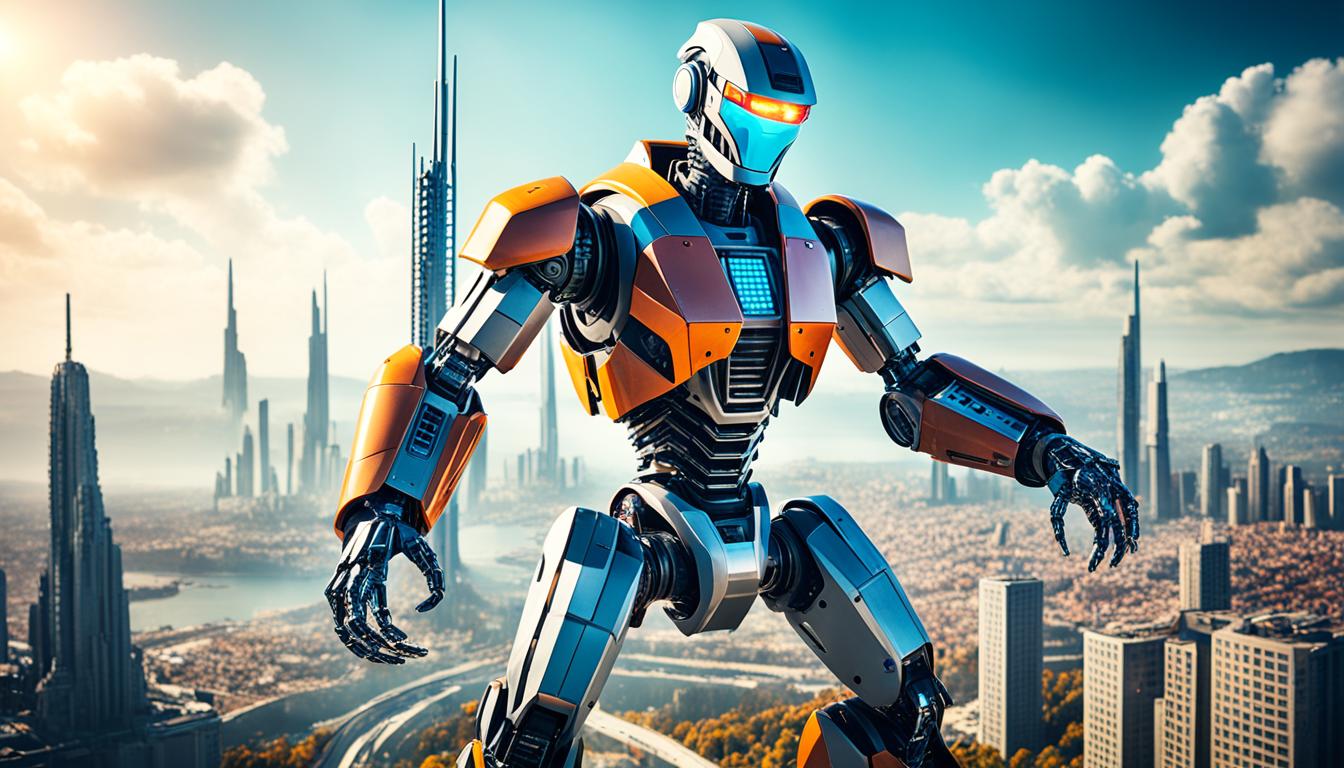
Robotics is changing how we live, work, and interact with the world. It’s moving from industrial automation to healthcare, making new things possible. This article will show you the exciting world of robotics. We’ll look at its history, advancements, and how it’s changing our lives and industries.
Robotics leads in technological innovation, making our future more efficient and precise. It’s about the complex parts of industrial robots and the smart artificial intelligence in self-driving cars. This shows how humans are always pushing for progress.
We’ll dive into the amazing advancements in robotics. These changes are making complex tasks easier, improving manufacturing, and changing healthcare. Let’s see the huge possibilities robotics offers for our future.
Robotics: Redefining the Future
The world of robotics is changing fast, pushing the limits of technology and innovation. It combines engineering, computer science, and artificial intelligence. Robotics is about making machines that can do tasks on their own or with some help. These machines are used in many areas like making things, healthcare, space, and even in our homes.
Scope and Impact of Robotics
Robotics is changing many industries, making things more automated and efficient. In manufacturing, robots help with assembly lines, making things faster and more precise. In healthcare, they help with surgeries, making them less invasive and helping patients recover faster.
Robots are also helping at home, making life easier for people everywhere. They assist with chores, making our lives better.
Historical Milestones in Robotic Development
The history of robotics is full of important steps forward. It started with early automation and has grown with new technologies like artificial intelligence. Important moments include the first industrial robot in the 1960s, the first humanoid robots in the 1970s, and the cobots that work with people today.
Robotics is still growing and will have a big impact on our lives. It will change industries, make daily tasks easier, and open new possibilities. The future of robotics is exciting, changing how we live, work, and use technology.
The Anatomy of Robots
Robots are complex machines made up of many parts that work together. Knowing about the main parts of a robot helps us understand how they work and what they can do.
Components and Design Principles
Robots have three main parts: sensors, actuators, and control systems. Sensors like cameras and touch sensors collect data about the robot and its surroundings. Actuators, which include motors, make the robot move by following the control system’s orders.
The control system, often a microprocessor or computer, uses the sensor data and actuator movements to guide the robot. It makes sure the robot does what it’s programmed to do.
Designing robots also involves important principles. For example, making robots modular means parts can be easily changed or updated. This makes them easier to maintain and adapt to new tasks. Robots also need to be adaptable, so they can change how they work in different situations. Being energy-efficient helps robots use power wisely and last longer.
By using these key parts and design ideas, engineers make robots that can handle tough tasks and explore new possibilities in robot design, robot components, and robotics engineering.
Artificial Intelligence and Robotics
Artificial intelligence (AI) and robotics have changed the game, making robots do more and do it better. AI lets robots see, understand, and make choices on their own. This means they can handle complex tasks with ease and speed.
These two fields have pushed forward in areas like computer vision and natural language processing. Computer vision lets robots see and understand what’s around them. They can move around, spot objects, and even handle them with care. Natural language processing lets robots talk and understand human language, making them better at working with people.
Machine learning is key to making robots smarter and more flexible. It’s like how you get better at something the more you do it. Robots use machine learning to learn from data and improve over time. This lets them take on tougher challenges.
Automation and robotics, powered by AI, are changing many industries. In manufacturing, robots work faster and more accurately, making things more efficient. In healthcare, AI robots help with surgeries, making them more precise and less invasive. This leads to better health outcomes and shorter recovery times.
We’re just starting to see what AI and robotics can do. As they keep evolving, we’ll see more new uses and big changes in our lives. This will shape how we work, live, and use technology in the future.
Industrial Robotics: Automating Manufacturing
The manufacturing world has changed a lot, thanks to industrial robotics. These machines are key to making things run smoother and faster. They bring precision, efficiency, and a big boost in productivity.
Applications in Assembly Lines
Industrial robots are now a big part of making things. They do tasks like welding, painting, and moving parts around. These robots work fast, accurately, and without getting tired. This lets people do more creative work, making things better and faster.
Precision and Efficiency Gains
Robots have made making things more precise and efficient. They work non-stop, making sure every part is put together just right. This means fewer mistakes, better quality products, and savings for companies. Also, making assembly lines automated cuts down on time and uses resources better.
Industrial robotics has changed manufacturing a lot. It’s made things run smoother and faster. As manufacturing keeps changing, robots will play an even bigger role. They’re leading us into a new era of making things better.

Service Robotics: Enhancing Daily Life
Service robotics goes beyond the industrial world, touching our daily lives. These smart machines help us at home and work, from cleaning to personal care. They show how they’re changing our lives by doing tasks, being friends, and showing us the future of smart homes.
Household Robots: A Glimpse into the Future
Household robots lead the service robotics change, making many tasks easier. They’re moving into our homes, making life better with their efficiency and flexibility. From cleaning robots to lawn mowers, they’re part of the smart home, changing how we live.
These robots do more than just clean or mow. They offer companionship and support. For the elderly or those with special needs, they bring independence and joy. Robotic pets also bring happiness to those who can’t have real pets. This shows how service robotics is making life better and promising a future where tech and humans work together well.
Service robotics is changing our lives more and more. It offers practical help and emotional support. As this field grows, we see how robots are changing our daily lives. They’re making technology a part of our lives in good ways, showing a bright future for us and robots.
Robotics in Healthcare: Advancing Patient Care
The healthcare industry has seen big changes with robotics technology. Surgical robots are leading this change. They help skilled surgeons do their jobs better. These robots make surgeries more precise and less invasive, leading to better patient care.
Surgical Robots: Precision and Minimally Invasive Procedures
Surgical robots help surgeons work better. They offer great precision and control during complex surgeries. These robots use the latest technology to help patients recover faster and have fewer complications.
In fields like orthopedics, urology, and general surgery, these robots are changing how we do things. They let surgeons do procedures through tiny cuts. This means less pain for the patient, shorter stays in the hospital, and easier recovery.
These robots use artificial intelligence and advanced sensors to work better. They give surgeons real-time feedback and help them make better decisions. This leads to better care for patients and better health outcomes.
The future looks bright for healthcare robotics. Surgical robots will play a big part in patient care. They will help with everything from cancer treatments to delicate brain surgeries. These technologies are set to change healthcare for the better, offering care that is more tailored to each patient’s needs.
Robotics in Space Exploration
Space exploration has always been a place for robotics to shine. From the famous Mars rovers to the advanced spacecraft that go beyond our planet, these robots help us learn about the universe. NASA uses robotics to explore space like never before.
The Mars rover program is a top example of robotic space exploration. Rovers like Curiosity and Perseverance move on Mars, collecting data and doing experiments. They send back important info to Earth, helping us learn more about Mars.

Robots also help us see the universe in ways we never could before. The Hubble and James Webb Space Telescopes show us distant galaxies. These robots send back amazing pictures and data, changing what we know about the universe.
The future of space travel will depend a lot on robots. We’re planning to explore the moons of Jupiter and Saturn, and maybe even walk on Mars. Robots will be key in making these missions happen. They’ll do important tasks and help us on our space journey.
Educational Robotics: Inspiring the Next Generation
Robotics is changing industries and capturing the next generation’s imagination. Schools are adding robotics to their classes to spark interest and keep students engaged. With coding workshops and robotics competitions, young people are learning to love technology, solve problems, and be creative.
Educational robotics is changing STEM education for the better. It teaches students about coding and programming while improving their critical thinking, teamwork, and hands-on skills. This prepares a new generation of robotics fans ready to face tomorrow’s challenges.
Robotics clubs and after-school programs are key in growing the next generation of innovators. They let students dive deep into technology, design robots, and join in competitions. These activities build a sense of community and encourage students to dream big in robotics.
The need for robotics and technology experts is growing fast. Educational robotics programs are essential, linking young people with the tools and knowledge they need to succeed. By sparking a love for robotics, we’re investing in tomorrow’s innovators and leaders.
Ethical Considerations in Robotics
The world of robotics and artificial intelligence (AI) is growing fast. It’s important to think about the ethical sides of these changes. We need to focus on safety, being responsible, and how these changes might affect the economy and society.
Safety and Responsibility
Keeping robotic systems safe is a top priority. These technologies can greatly affect people’s lives. We must look into privacy, data security, and the chance of something going wrong.
Robotics and AI ethics are key to making sure these systems are made and used with great care. They should always put the safety of users and the public first.
Who is responsible for what robots do is a big question. It involves policymakers, developers, and users. We need clear rules for who is responsible and liable.
Socio-Economic Impact
Robots and automation could change the job market a lot. This raises worries about jobs and how it will affect people and communities. It’s important to make sure the good things about these technologies go to everyone.
We need to help workers who lose their jobs because of these changes. Giving them training and support to find new jobs is key.
By thinking about the ethical sides of robotics, we can use these technologies in a way that fits with our values. This will help us make progress that is good for everyone.
Cutting-Edge Advancements and Future Trends
The world of robotics is changing fast. Researchers and engineers are exploring new frontiers. They’re using soft materials to make robots that can move through tight spaces and handle fragile items. These robots act like living creatures, making them useful in healthcare and rescue work.
Swarm intelligence is another big step forward. It’s when many simple robots work together to do hard tasks. This idea comes from how ants and bees work together. It could be used for checking the environment, rescues, and building things on its own.
Artificial intelligence (AI) and quantum computing will shape the future of robotics. AI will change industries like making things, healthcare, and how we move around. Quantum computing will make robots think and act faster, helping them make quick decisions. Soon, robots and AI will work together perfectly, changing how we do things and solve problems.