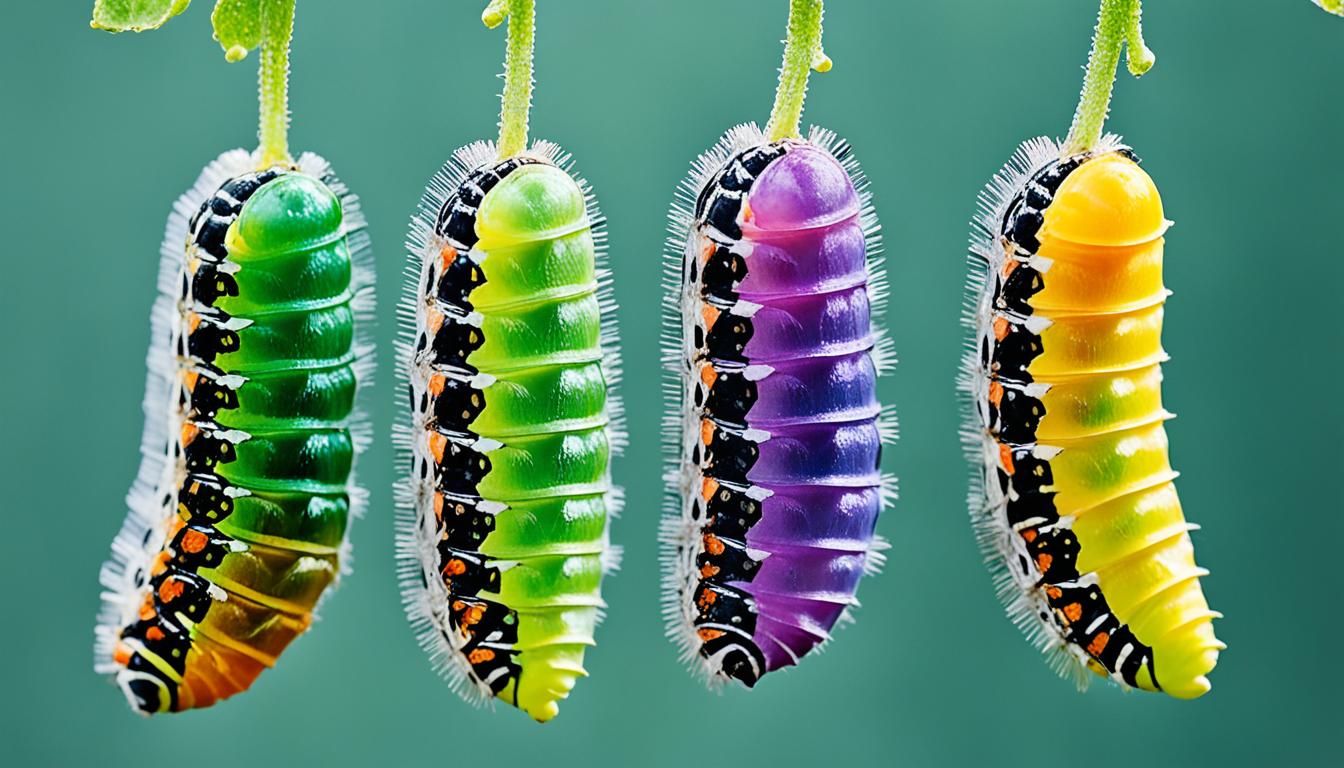
Get ready for an amazing journey into the life of a butterfly. From a tiny egg to a beautiful adult butterfly, this change is a wonder of nature. We’ll explore how a caterpillar changes into a butterfly through a magical process called metamorphosis.
In this article, we’ll look at the different stages of a butterfly’s life. We’ll see how the caterpillar eats a lot, how it changes in the chrysalis, and how it becomes a butterfly. Get ready to be amazed by the beauty and complexity of this incredible creature’s life cycle.
Unraveling the Magnificent Metamorphosis
The butterfly life cycle is a captivating display of nature’s transformation. It starts with a simple egg and ends with a beautiful butterfly. Each stage, from the caterpillar to the adult, is vital for the butterfly’s journey.
The Four Stages of Butterfly Life
The life cycle of a butterfly has four main stages: egg, larva (caterpillar), pupa (chrysalis), and adult. These stages show how butterflies adapt and grow. The cycle begins with a tiny egg that turns into a hungry caterpillar, then changes in the chrysalis, and finally, emerges as an adult butterfly.
As the caterpillar eats and grows, it sheds its skin several times. This lets it get bigger and stronger. Then, it enters the pupa stage, where it changes completely in the chrysalis. This is when the caterpillar turns into the beautiful butterfly we see flying.
The four stages of the butterfly life cycle show how resilient and adaptable these insects are. From the simple egg to the amazing adult butterfly, each stage is important for their life cycle.
Egg: The Tiny Beginning
The life cycle of a butterfly starts with the butterfly egg. These tiny eggs are usually found on leaves or stems of the host plant. They set the stage for the amazing change that will happen next. Inside each butterfly egg, a caterpillar is waiting to start its big change.
The egg laying is a careful process. Female butterflies pick the right plant for their eggs. This ensures their babies will have enough food. After the egg hatching, the caterpillar comes out, ready for its next big step.
The butterfly egg is a special structure. It protects and helps the future butterfly grow. Everything about the egg, from its shell to the right temperature and humidity, is important for egg hatching. Each part of the egg’s development is key to the butterfly’s life cycle.
Larva: The Voracious Caterpillar
When the tiny egg hatches, the butterfly’s journey starts with the caterpillar stage. These caterpillars eat a lot to grow fast. They have a hard shell that they shed to grow bigger.
Molting and Growth Spurts
Caterpillars shed their skin several times as they get bigger. This lets them grow and get ready for the next stage. They change a lot during these growth spurts, getting new skin and muscles.
After shedding their skin, they have a bigger body. The larval stage is key for the butterfly’s future. The caterpillar eats a lot to get ready for its big change into a pupa and then an adult butterfly.

Pupa: The Chrysalis Transformation
After the caterpillar eats a lot, it changes into a butterfly in the pupa, or chrysalis. This change is called metamorphosis. The caterpillar’s body breaks down, and new parts form the adult butterfly.
The pupa is a special time of change. The caterpillar’s body turns into goo, and new parts start to form. These parts will become the butterfly’s wings, legs, and more.
This change inside the chrysalis is amazing. Cells break down and new ones form. This makes the butterfly’s wings, legs, and other adult parts.
As the pupa stage goes on, the butterfly’s wings and legs get stronger. They need to be ready to fly and live as adults.
The pupa, or chrysalis, is a key and interesting part of the butterfly’s life. It shows how nature can change and how strong these creatures are.
Educational: Witnessing Nature’s Wonders
Learning about the life cycle of butterflies is a great way for both kids and adults to see nature’s beauty. By watching the different stages of their growth, we can appreciate nature more. This includes the amazing changes they go through.
The journey of a butterfly’s life cycle is fascinating. It takes us from a tiny egg to a beautiful flying adult. By studying butterflies and their changes, we can feel amazed and get excited about nature and science.
Seeing the life cycle of a butterfly can change how we see the world. In class or at home, watching a caterpillar eat, a chrysalis change, and a butterfly come out is special. It shows us the beauty of life up close.
This learning experience helps us understand butterflies better. It also makes us value nature more. By learning about butterflies, we can respect their homes and help protect them.
Adult Butterfly: The Winged Beauty
The adult butterfly is the last stage of its life cycle. It emerges with vibrant wings and flies away. This stage is key for pollination and amazing migrations.
Pollination and Migration Marvels
Adult butterflies move from flower to flower, collecting pollen. They then spread this pollen to other plants. This is crucial for many plants to reproduce and survive.
Butterflies are also famous for their long migrations. The Monarch butterfly, for example, travels hundreds of miles each year. This journey is a natural wonder, showing how adaptable these insects are.

From caterpillar to adult butterfly, it’s a magical change. These creatures amaze us with their beauty and grace. They remind us of the balance in our ecosystems.
Butterfly Gardening: Creating a Welcoming Habitat
Gardeners can help save butterfly populations by making their yards and gardens welcoming. By planting native, nectar-rich flowers and offering water, they can draw in many butterfly species.
For a butterfly garden, focus on native plants that fit the local climate and soil. These plants feed and shelter butterflies and help the ecosystem’s health. Using a mix of native flowers, from bright annuals to long-lasting perennials, keeps nectar available all season.
Adding more to your garden can help butterflies too. A shallow birdbath or a butterfly puddling station gives them water. Using organic gardening and avoiding harsh pesticides makes your garden safe for butterflies.
By gardening for butterflies, you enjoy their beauty and help save them. Making your backyard a butterfly haven connects you with nature and helps local ecosystems.
Threats and Conservation Efforts
Butterflies face many threats today. Habitat loss, pesticide use, and climate change are big challenges. Yet, there are efforts to save their homes.
Habitat loss is a big threat. As cities and farms grow, butterflies lose their homes. Conservation groups are creating safe areas for them.
Protecting Precious Pollinators
Butterflies are vital for our ecosystems. Pesticides harm them, affecting our food chain. We need to use safe land practices to protect them.
Climate change is another big threat. It changes their lives and travels. We’re working to make habitats that can handle these changes.
We must spread the word about saving butterflies. Supporting projects to protect their homes helps. Together, we can keep these beautiful creatures around for the future.
Butterfly Symbolism and Cultural Significance
Butterflies have always caught our eye, more than just for their looks. They’ve become symbols of big ideas like change, hope, and life’s fragility. Artists, poets, and spiritual leaders see their beauty and use it to inspire.
In many beliefs, butterflies stand for the soul. They show the cycle of life, death, and being reborn. Their amazing change from caterpillar to butterfly teaches us about growing, starting anew, and beating tough times. This idea is found in many stories, from old Greek tales to Native American stories.
Butterflies also play a big role in art, books, and stories. They symbolize happiness, freedom, and how short life can be. Their beauty and flight have led to many artistic works, from detailed patterns in textiles to stories for kids. This shows how much we value these insects and their connection to us.